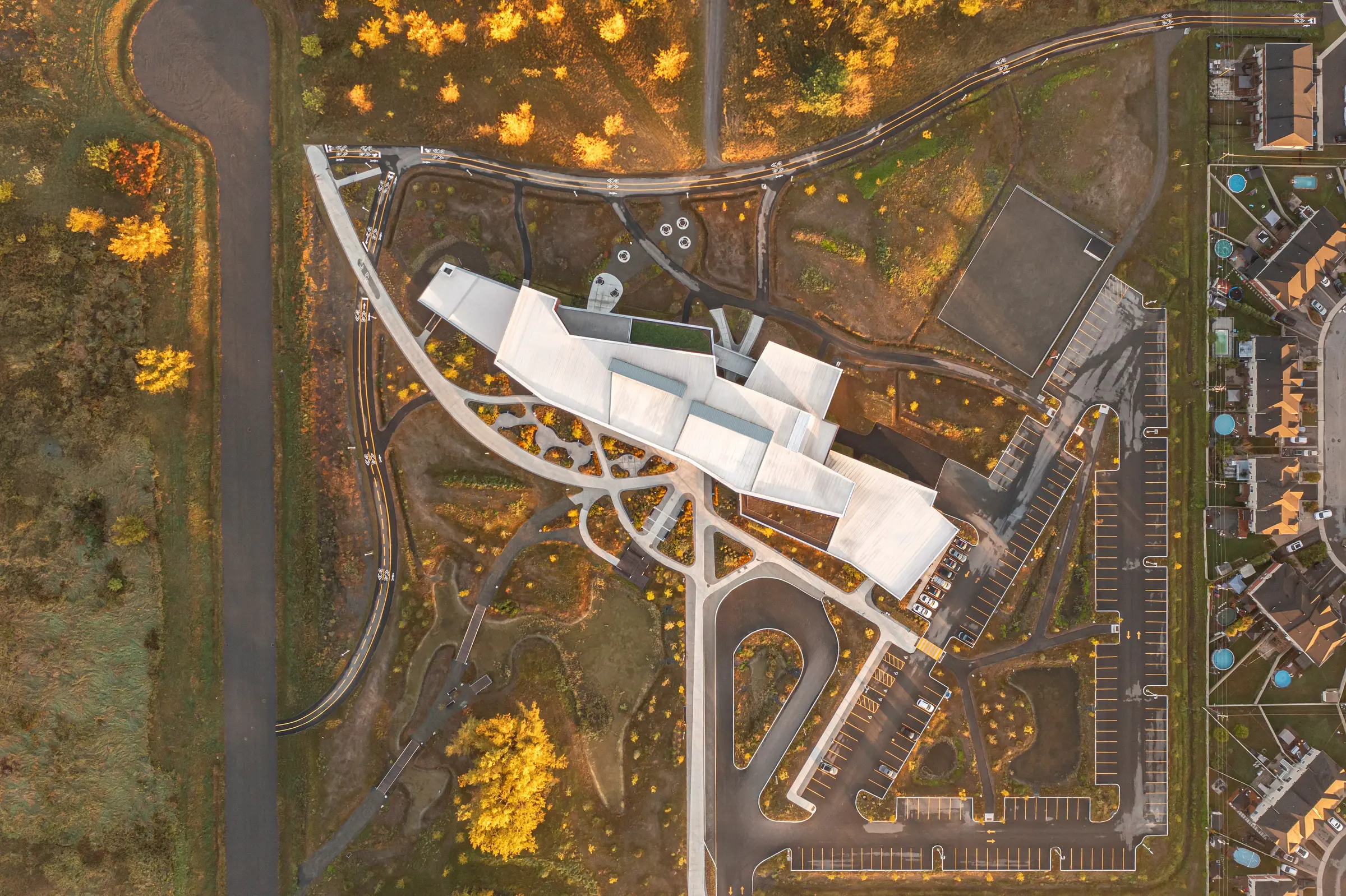
The Espace citoyen des Confluents in Laval shows how architecture and landscape can be conceived as one.
In the collective imagination, landscape design often comes after architecture — something that enhances a building once it has been constructed. Yet some places emerge from an entirely different dialogue. Here, architecture and landscape are conceived together, in a resolutely transdisciplinary approach grounded in a shared responsibility for design.
On this site, once occupied by a petrochemical plant, the transformation went beyond the introduction of new public facilities. It began with a simple question: what could this territory become if we started from its natural dynamics?
©Pierre-Alexandre Guay
Land in need of repair
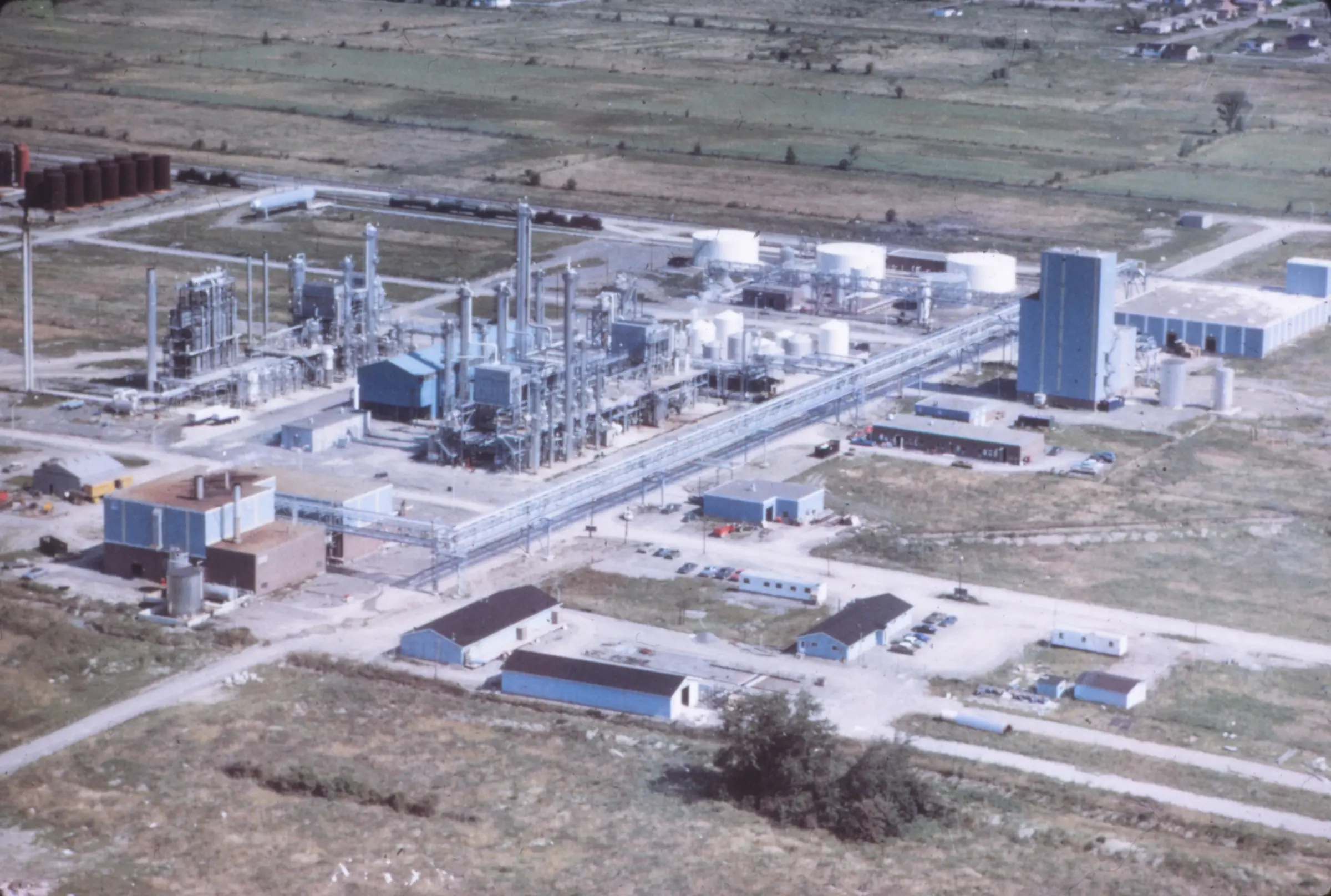
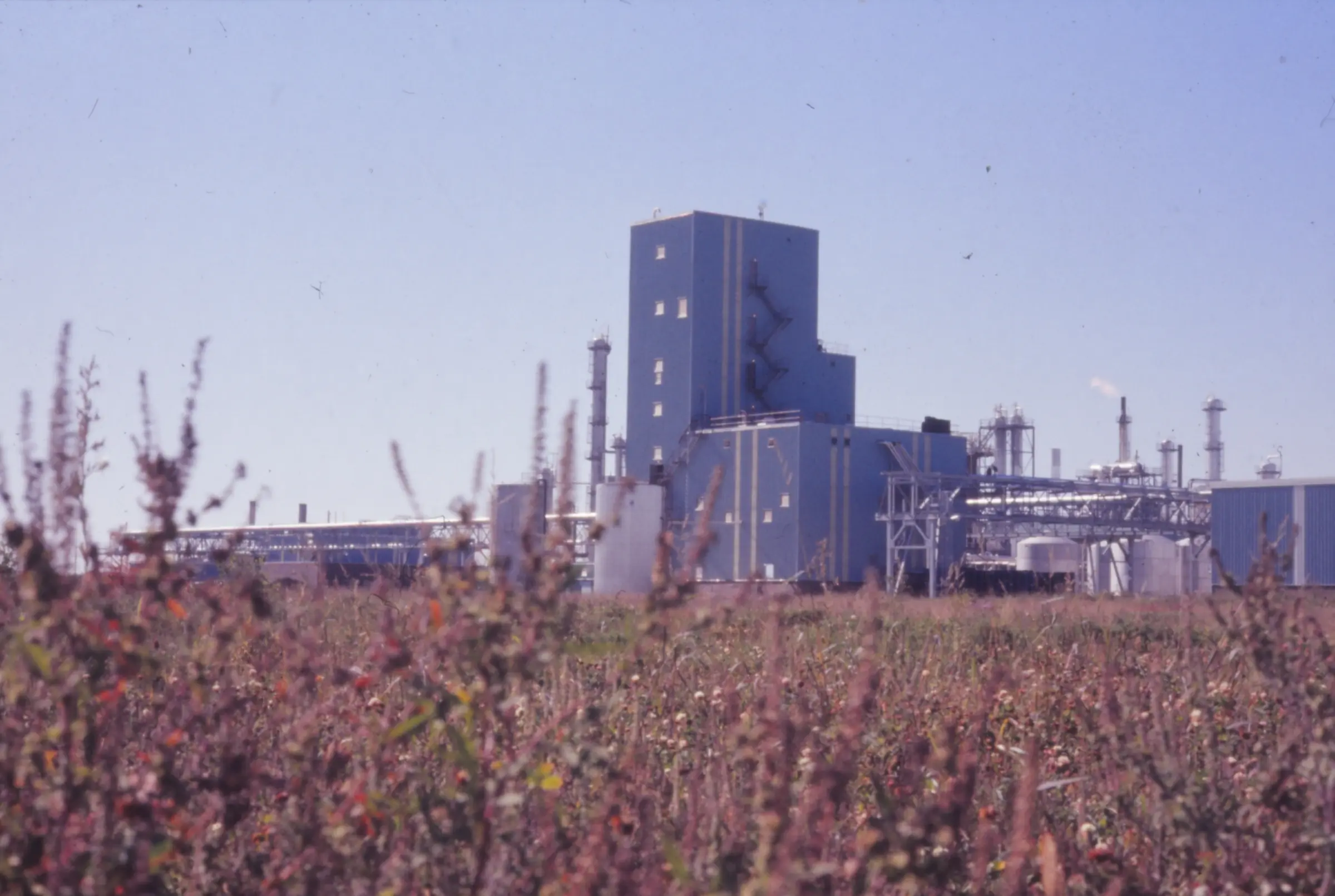
Situated at the intersection of Laval’s Saint-François and Duvernay-Est districts, the site still bears the marks of its industrial past. Originally woodland, later converted to farmland, and then home to a BASF petrochemical plant in the 1970s and 1980s, it remained a disturbed brownfield long after remediation efforts.
Rather than erasing this history, the design draws on the site’s intrinsic qualities. Fertile clay soils, proximity to wetlands, and natural capacity to retain water informed an approach grounded in regeneration.
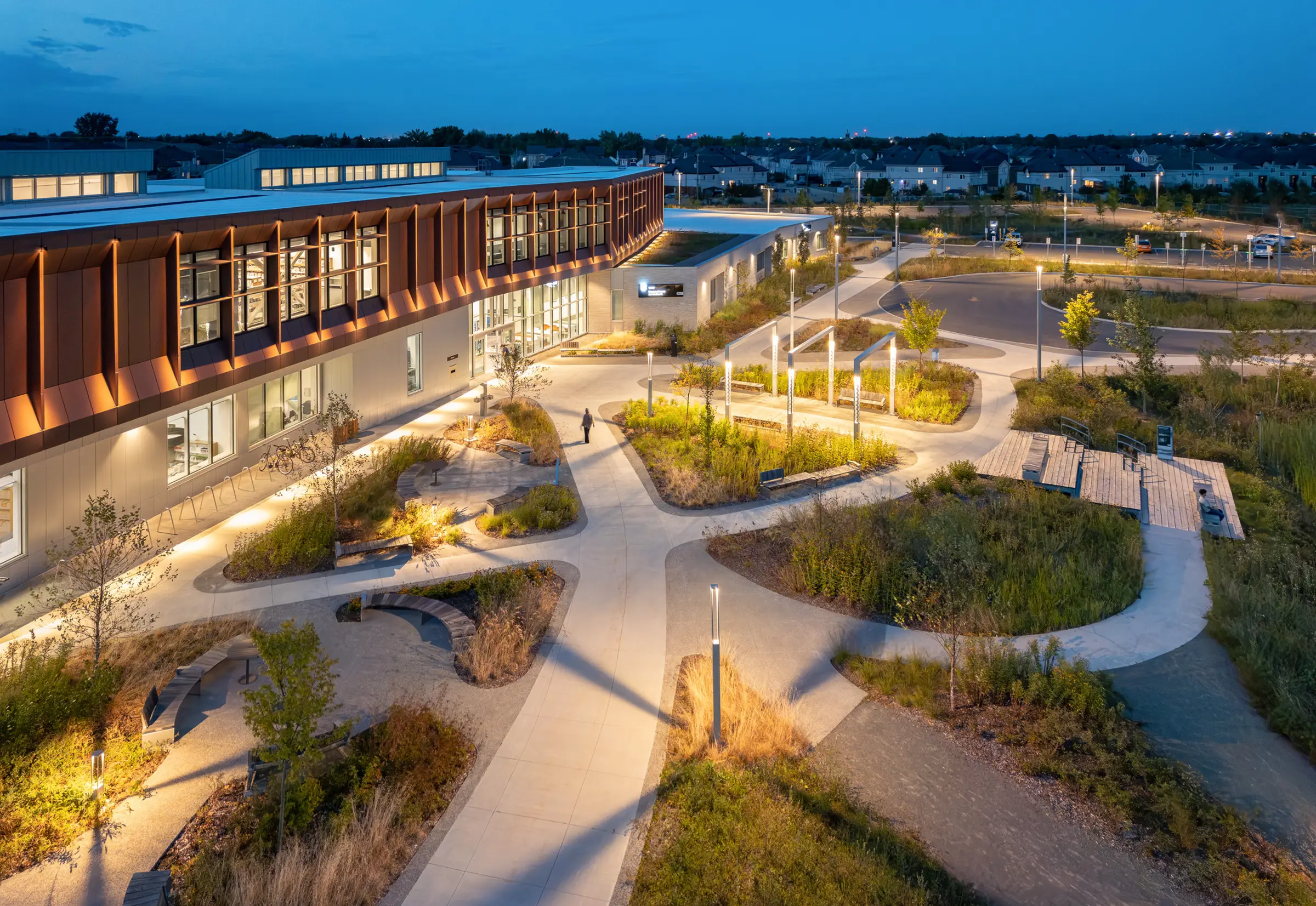
The project transforms the former industrial site into an inhabited civic landscape. A library, cultural facilities, and municipal services are woven into a network of paths, rest areas, and active transportation routes connecting surrounding neighbourhoods.
©Ville de Laval Archives
©Ville de Laval Archives
Water as the backbone of the landscape
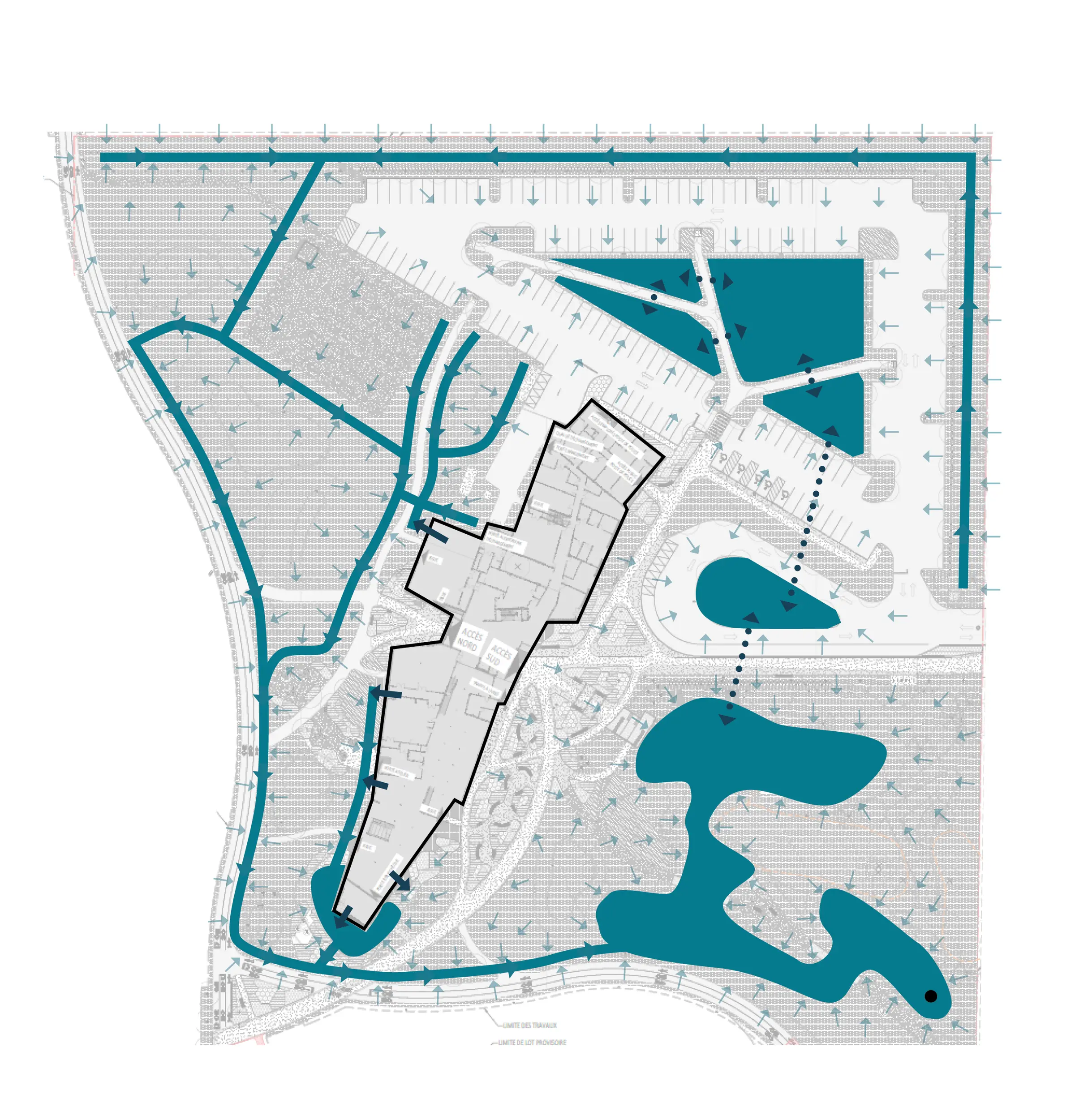
Here, hydrology drives the design. A network of interconnected basins captures rainwater and runoff, guiding it gradually through the site. This visible water management approach enables all stormwater to be treated while supporting the emergence of rich biodiversity.
More than 300 trees have been planted and ecological corridors encourage the gradual establishment of a living ecosystem. Spontaneous vegetation contributes to an evolving landscape that changes with the seasons.
Even the parking lot is part of this approach. Its triangular layout reduces the mineral footprint and limits impervious surfaces, while over time, the tree canopy will mitigate heat islands.
©Projet Paysage
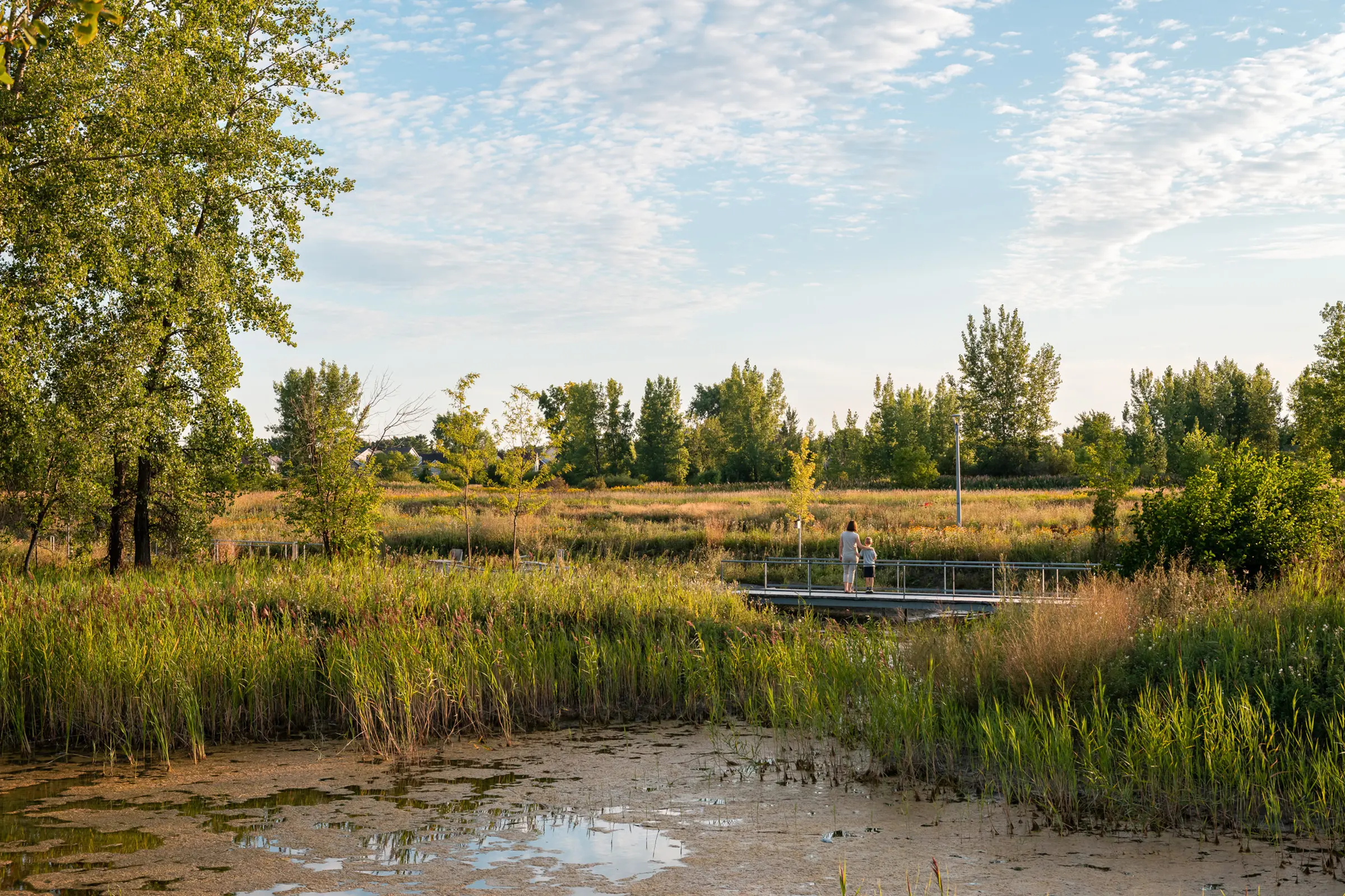
©Vincent Brillant
A truly integrated design
From the earliest phases of the design, we worked closely with architecture firm Cardin Julien to design a coherent civic space where architecture and landscape structure one other.
This collaboration goes beyond formal adjustments; it reflects a shared responsibility in shaping public spaces.
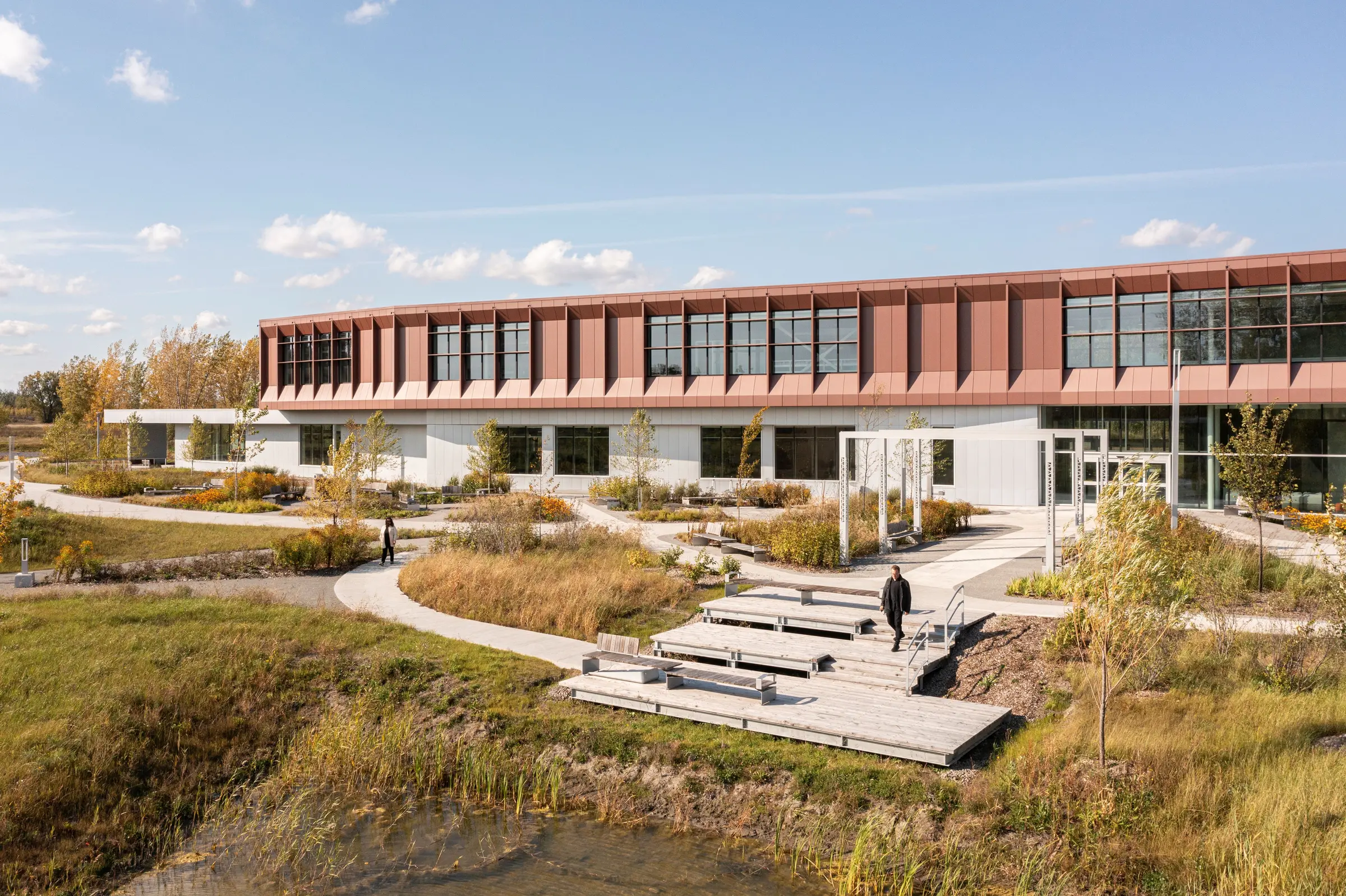
©David Boyer
Certified LEED v4 Gold, the project demonstrates the potential of integrated approaches in the design of civic hubs that combine environmental performance, spatial quality, and a strong sense of place.
The building serves as a focal point, while the landscape structures movement and rhythm across the site. Its bioclimatic orientation interacts with the layout of exterior pathways and the site’s hydrological system.
This approach reinforces the continuity between indoors and outdoors: openings frame the landscape, pathways extend the experience of the building, and outdoor areas become true gathering places.
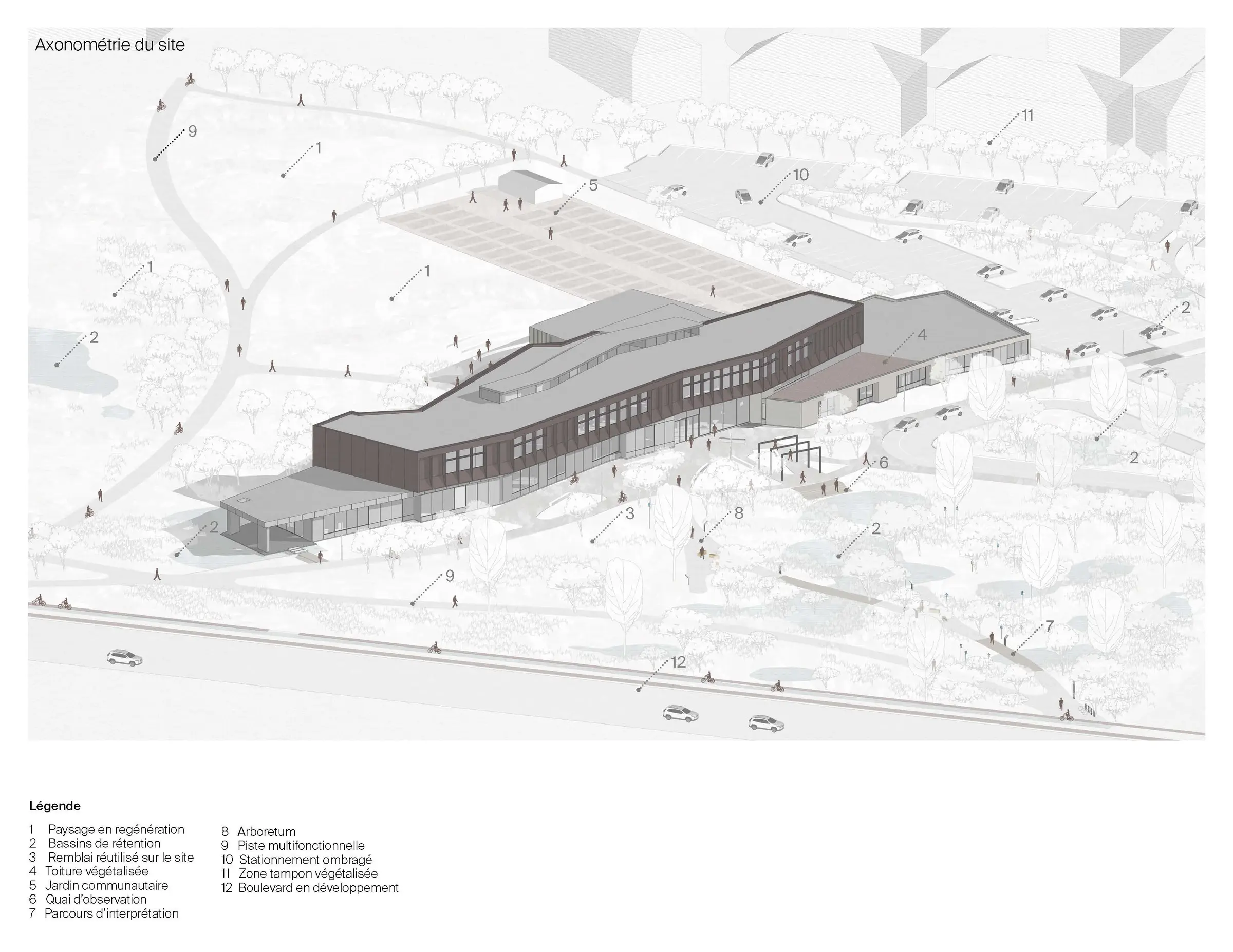
©Cardin Julien
Landscape to inhabit
Open to the public since 2024, the Espace citoyen des Confluents can be explored on foot or by bike. People come to read, observe wildlife, or simply slow down, as well as to participate in cultural activities, attend workshops, and use the community spaces integrated into the building. Paths wind between basins and vegetation, offering the rare experience of a dense green space within an established urban setting.
Conceived as a true third place, the site fosters both social interaction and a connection with the living world. Through this project, we sought to show that landscape can move beyond aesthetics to become genuine ecological and social infrastructure.
When design begins with soil, water, and living systems, public spaces cease to be mere installations — they become living environments.
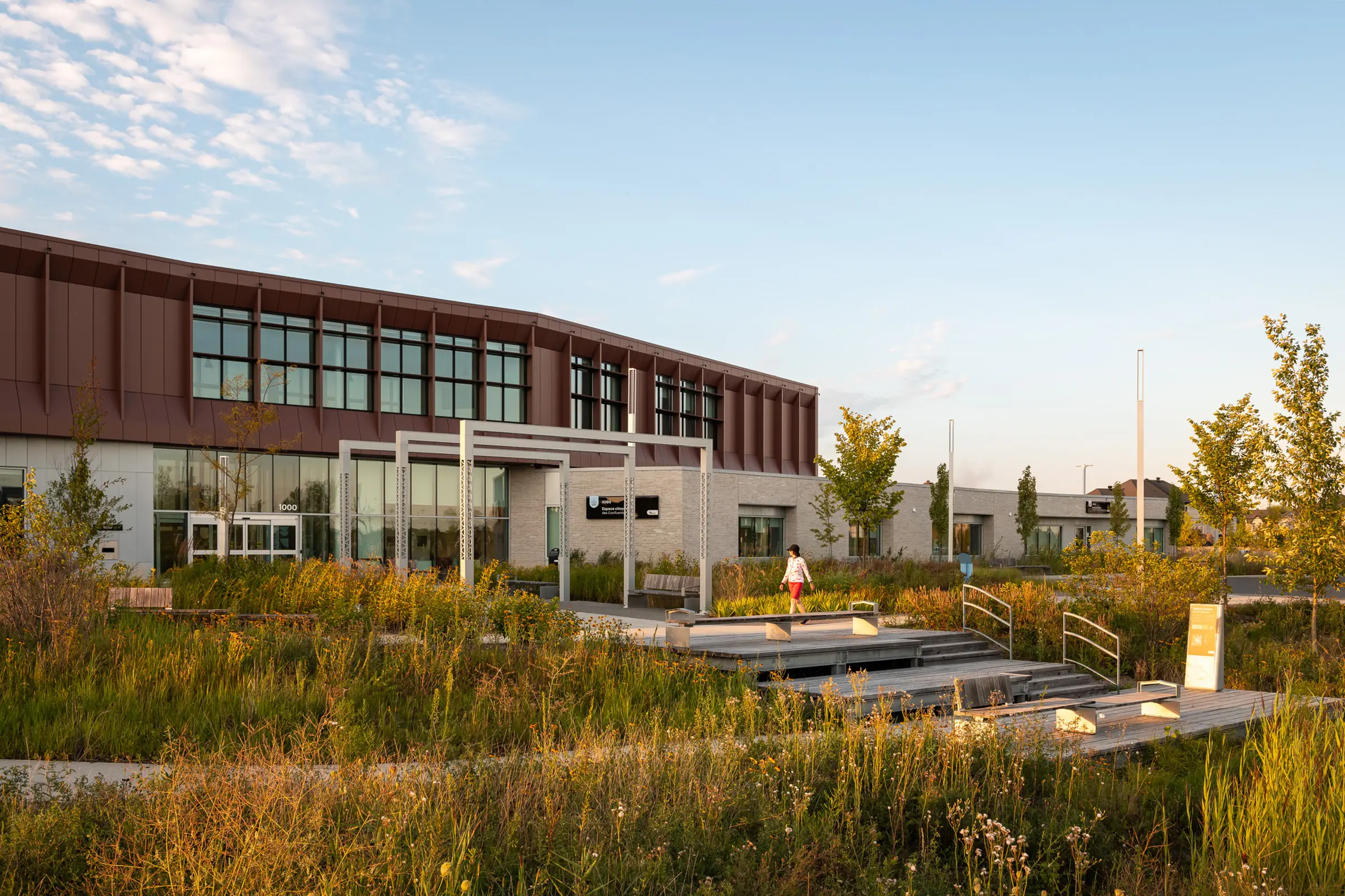
©Vincent Brillant
©Vincent Brillant
Share the article
Cardin Julien

Founded in Montréal in 1992, Cardin Julien designs architectural projects with a strong focus on community. Recognized for its expertise in institutional and cultural facilities, the firm places sustainable development at the heart of its approach. It creates inclusive environments tailored to the needs of communities, driven by the conviction that architecture must tangibly transform living environments and support the socio-ecological transition.