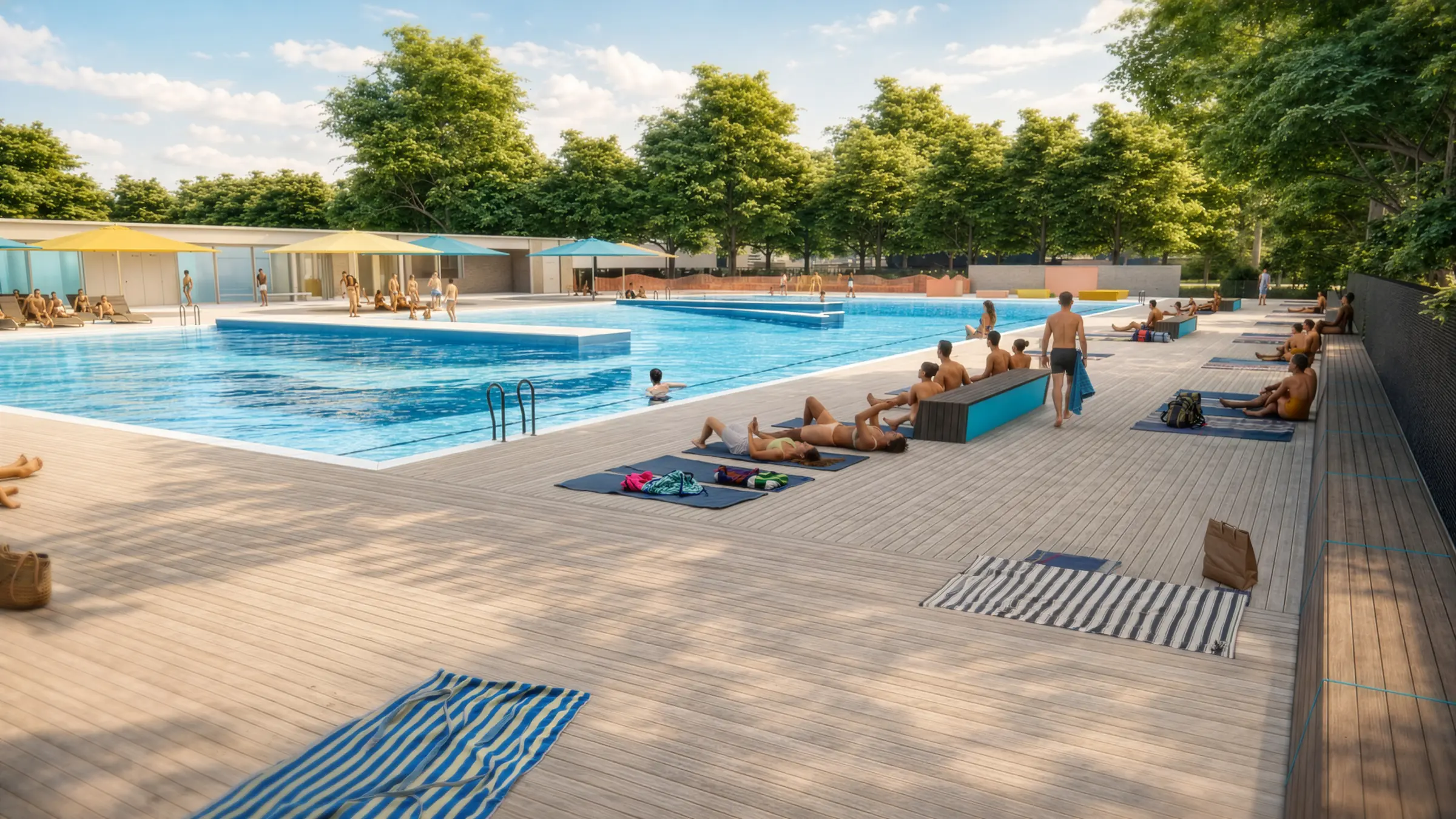
At a time when many public aquatic facilities in Québec are revealing the limitations of models designed for the urban, social and climatic realities of a different era, Projet Paysage has been helping redefine municipal water-related infrastructure for more than five years.
Drawing on nearly 35 years of expertise in recreational tourism, the firm creates environments where swimming, comfort and shared public life come together to foster a richer, more immersive connection to place.
Following models inherited from the second half of the 20th century, public aquatic facilities originally responded mainly to functional and recreational needs, at a time when municipalities were investing heavily in postwar public infrastructure. Mineral pools, vast concrete surfaces, chain-link fences and limited shaded areas left little room for comfort or for a diversity of experiences on site.
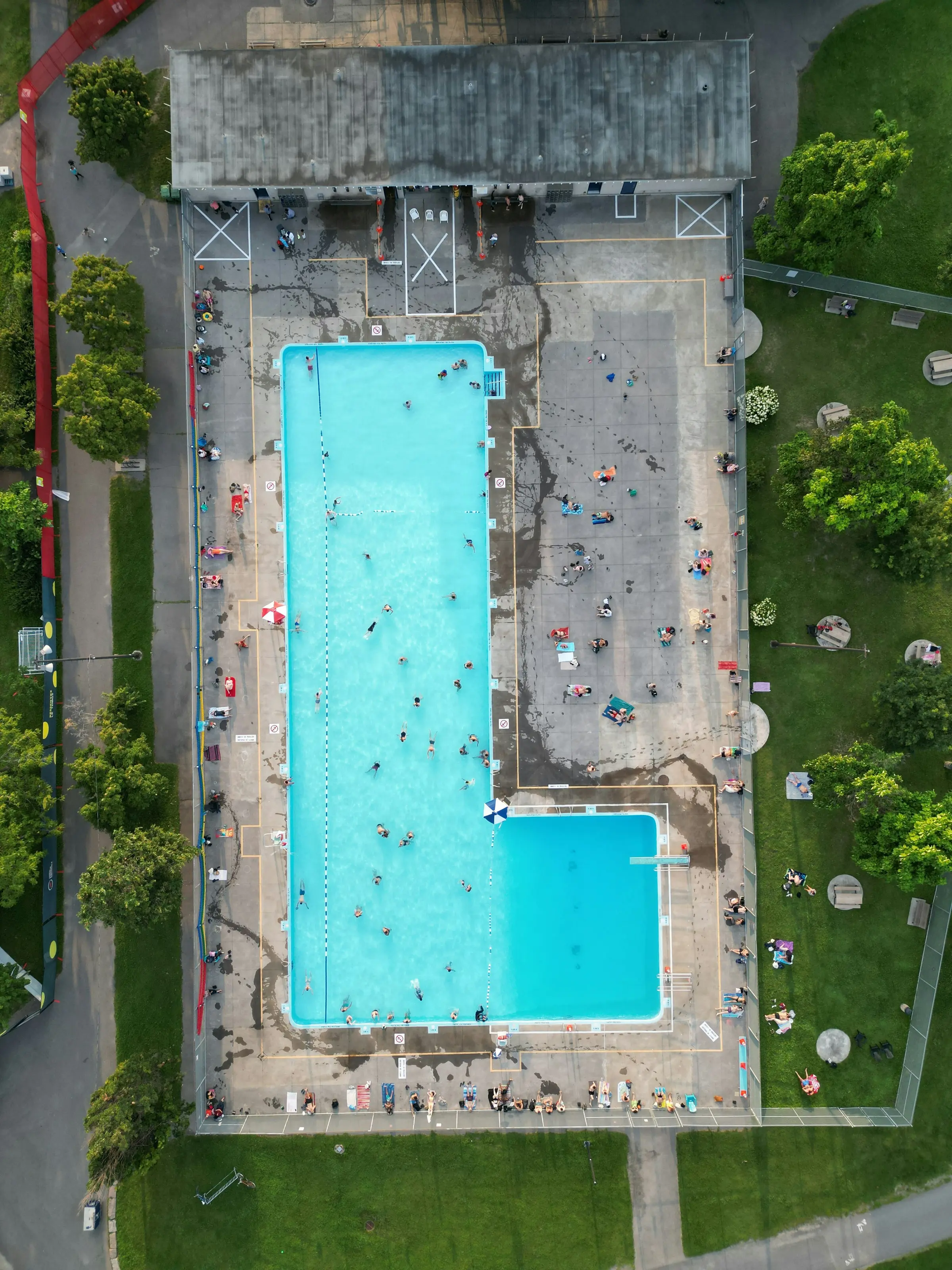
©Michel Nasr, Unsplash
Today, a population increasingly exposed to travel and new tourism standards has developed higher expectations regarding the quality of public facilities.
The goal is no longer simply to design a high-performing facility, but to imagine environments where people want to stay, gather and truly savour the summer season.
At Projet Paysage, swimming goes beyond just recreation. The firm’s landscape architects envision summer destinations where people come not only to play and escape the heat, but also to slow down, watch their children, read in the shade or enjoy a calming atmosphere. These spaces must accommodate a variety of uses and offer environments that are more generous, inclusive and welcoming. This approach is inspired in part by recreational tourism and resort destinations. Through pathways, cooling zones, vegetation, playful textures and the overall setting, the landscape creates an immersive and welcoming atmosphere.
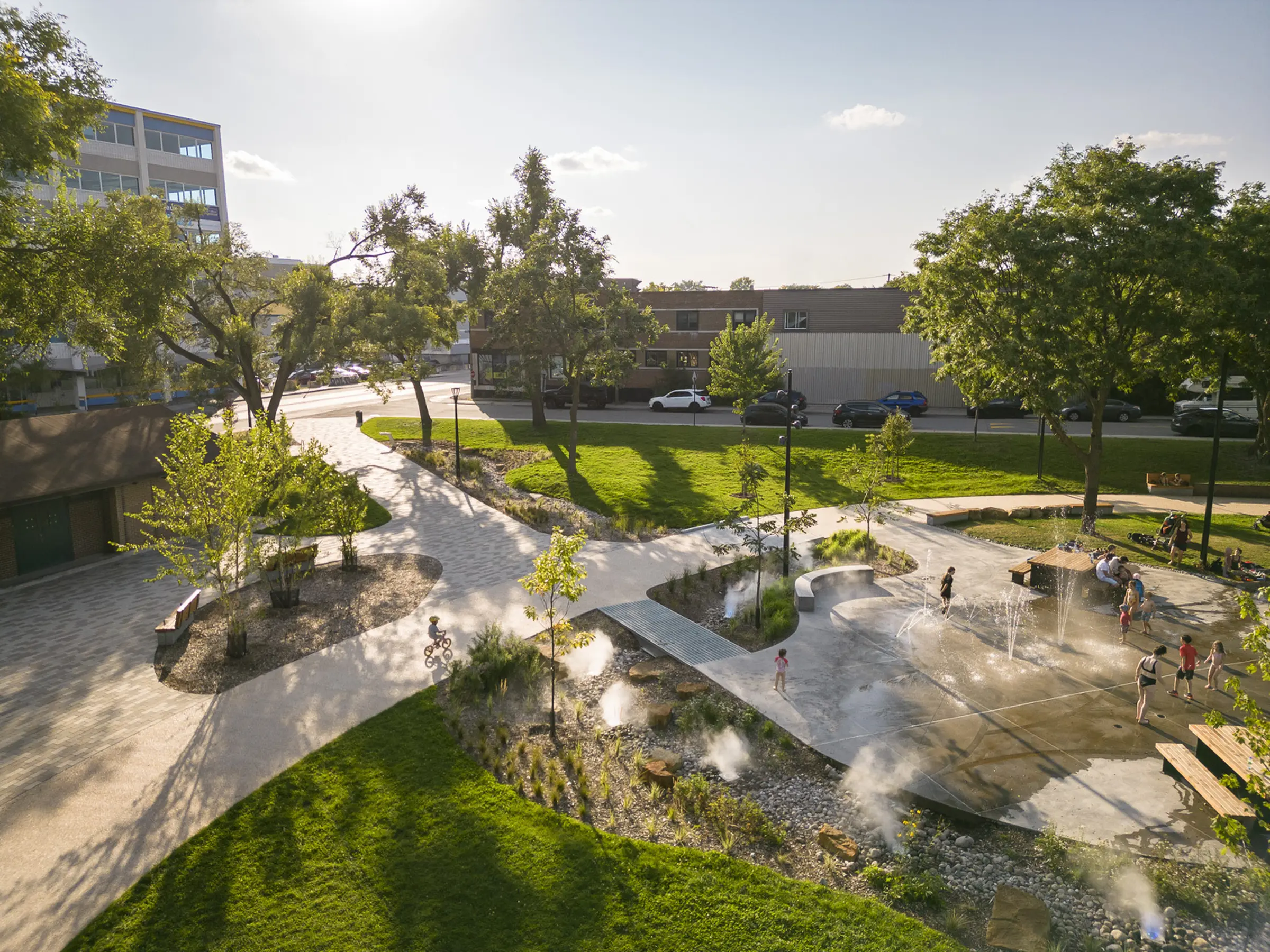
Parc Rosemont ©Vincent Brillant
Creating spaces for a diversity of uses
This evolution is also transforming the way universal accessibility is approached. Design teams are now considering a wide range of needs: seniors, parents with strollers, children, neurodivergent individuals and people who may feel less comfortable around deeper water. Gradual transitions into pools, relaxation areas and integrated furnishings allow a broader range of users to experience and enjoy these spaces in their own way.
The Baldwin project in Montréal and the Couvrette project in Laval, both completed in collaboration with Cardin Julien, are good examples of this approach. Other projects currently in development — including Jacques-Bourdon school park and Parc Jarry — continue this vision of recreational spaces designed as true third places.
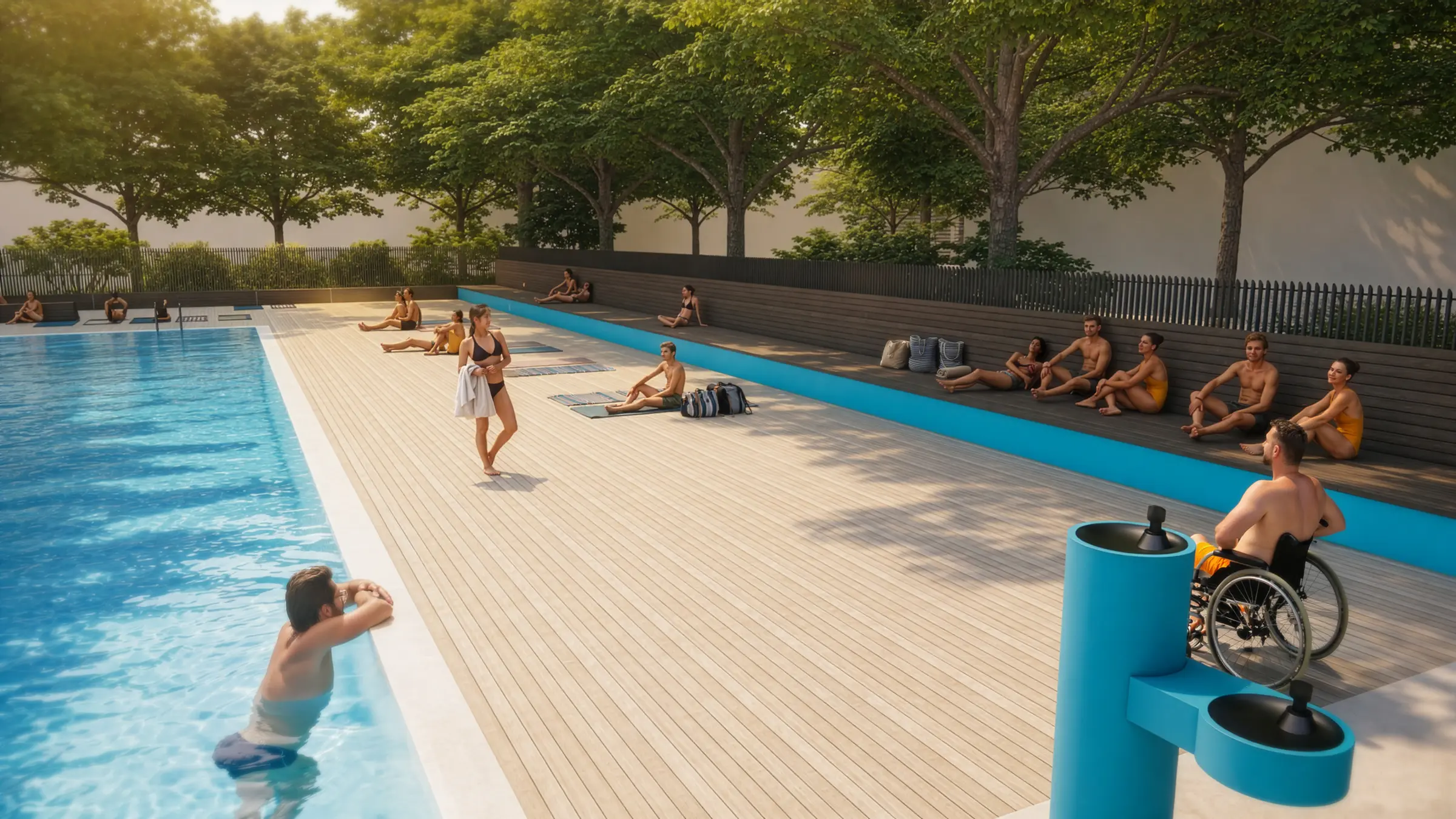
At Parc Baldwin, the atmosphere evokes a day at the lake. From the entrance plaza and pavilion entry, the view gradually opens onto a lively beach area, with parasols and swimmers, before extending toward the pool, framed in the background by a landscape of preserved mature trees.
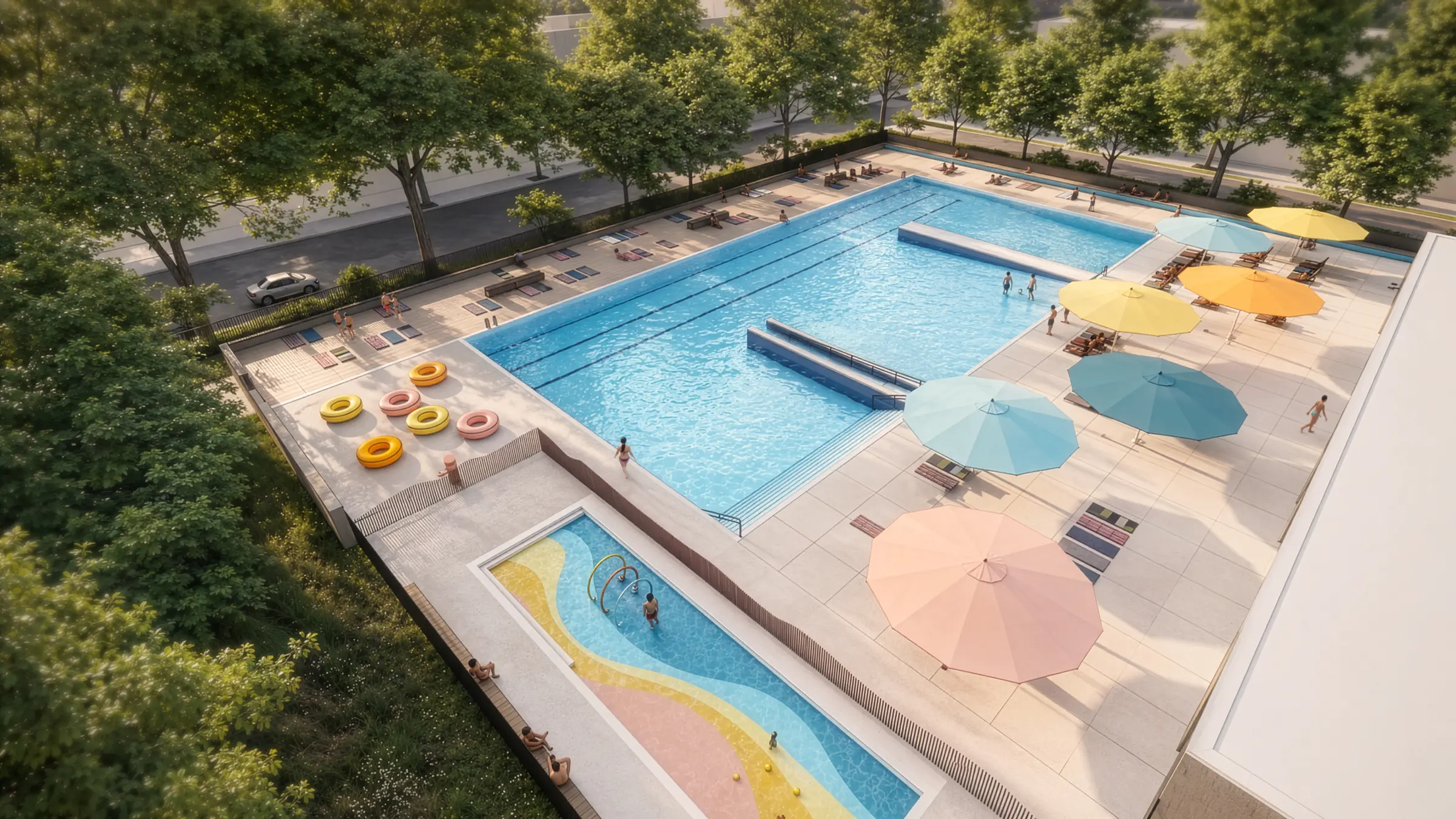
Parc Baldwin swimming pool
Parc Baldwin swimming pool
Conceived as an intuitive sequence, the pathway alternates between shaded and sunlit areas, recalling summer swims along the shores of Québec lakes. Beneath the tree canopy, large wooden benches on pilings create more flexible and welcoming rest areas while preserving the root systems of the existing trees.
A play of textures, colourful fencing and a softened approach to the water all contribute to creating a more immersive and accessible experience.
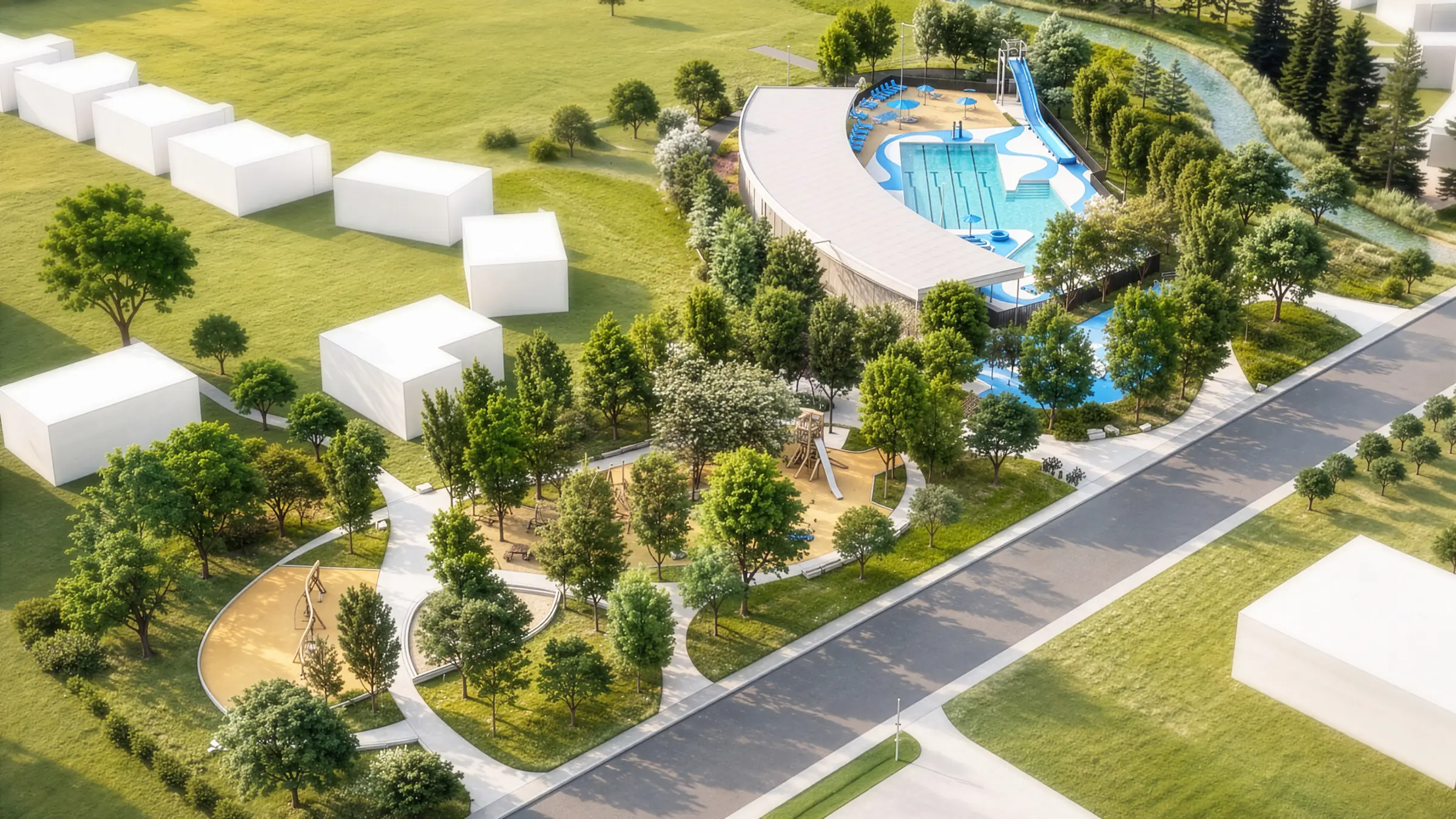
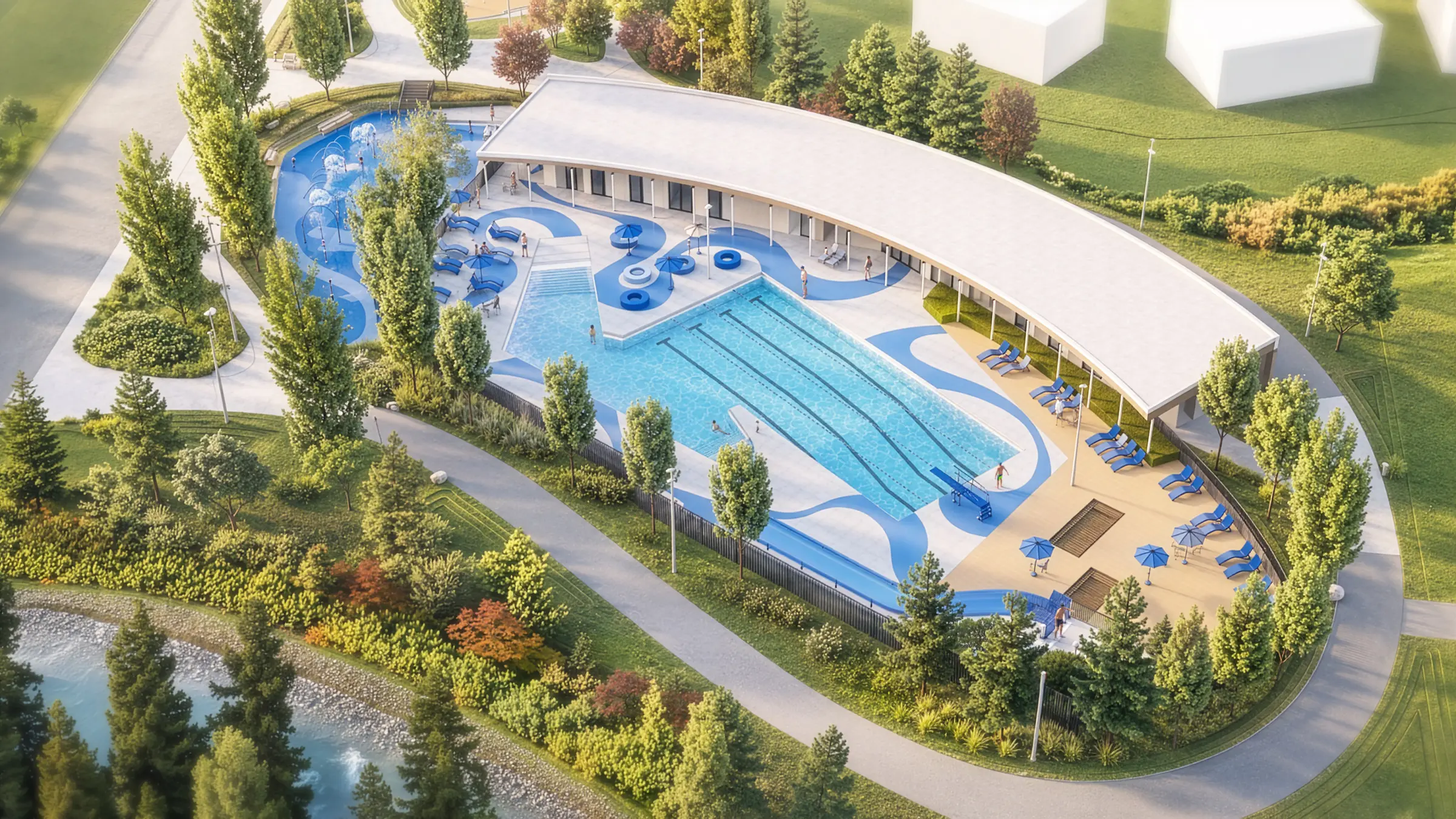
At Parc Couvrette in Laval, the project is part of a broader reflection on the site as a whole. The aquatic spaces are designed in dialogue with the surrounding leisure areas, creating an environment where different ways of using the site coexist naturally.
Parc Couvrette
Parc Couvrette
The park’s expansive family pathway leads to the pool enclosure, where landscape-integrated relaxation areas — including hammock-style nets built into the ground structure — extend the playful nature of the experience. A hydro-brake slide complements the pool area, while the splash pad remains accessible even when the facility is closed, extending the aquatic experience throughout the site.
To soften the enclosed feel created by safety-mandated fencing, the ground level inside the site was slightly raised, reducing the perception of barriers around the swimming amenities.
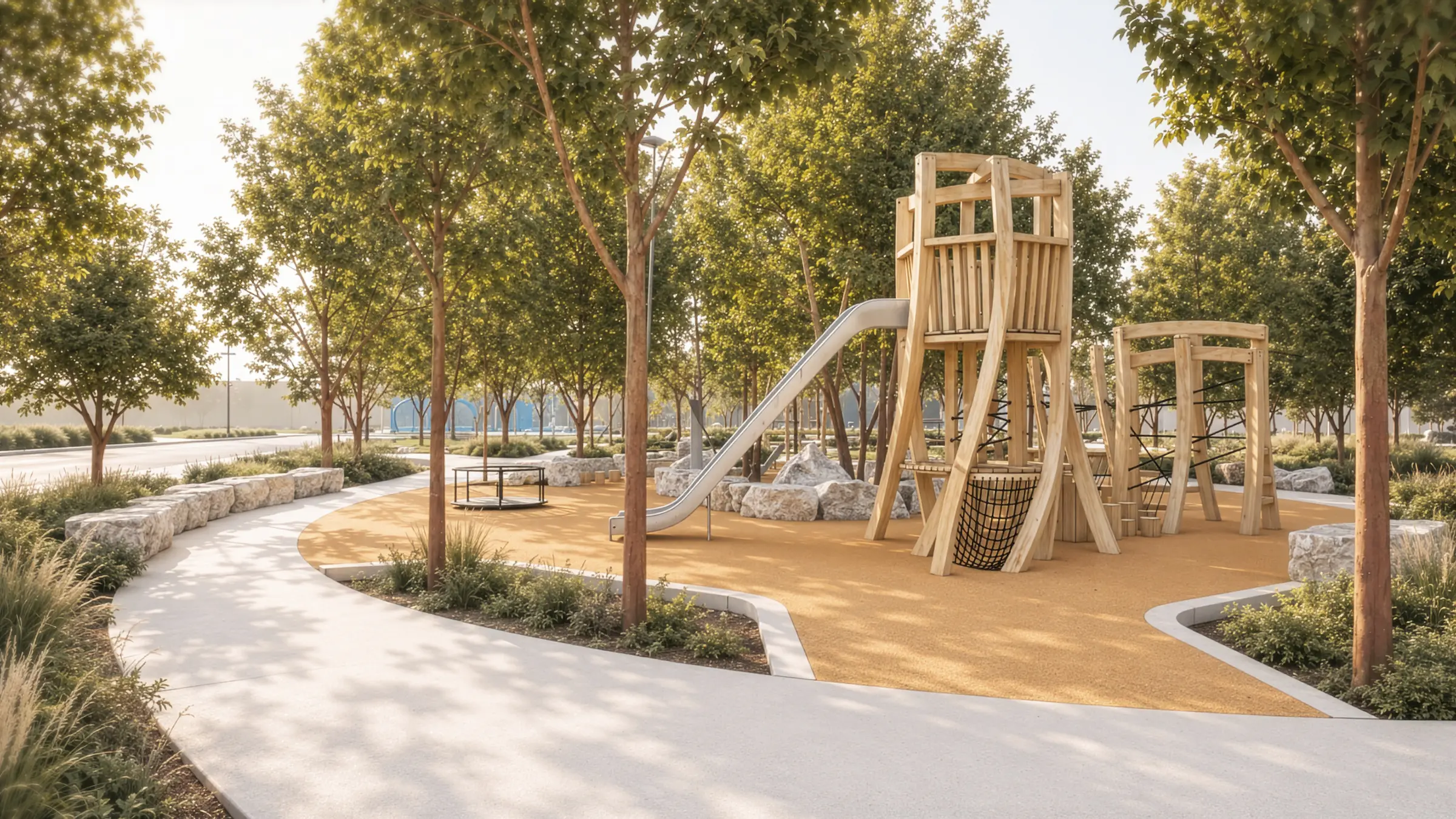
Plantings were integrated directly into play and circulation areas to provide cooling, shade and comfort every day. Children move freely from one zone to another, while parents enjoy vegetation-tempered spaces and comfortable seating integrated into the overall experience. Sensory and inclusive features — including universally accessible play modules, wheelchair-friendly surfaces and musical play elements — further enrich the design.
Parc Couvrette
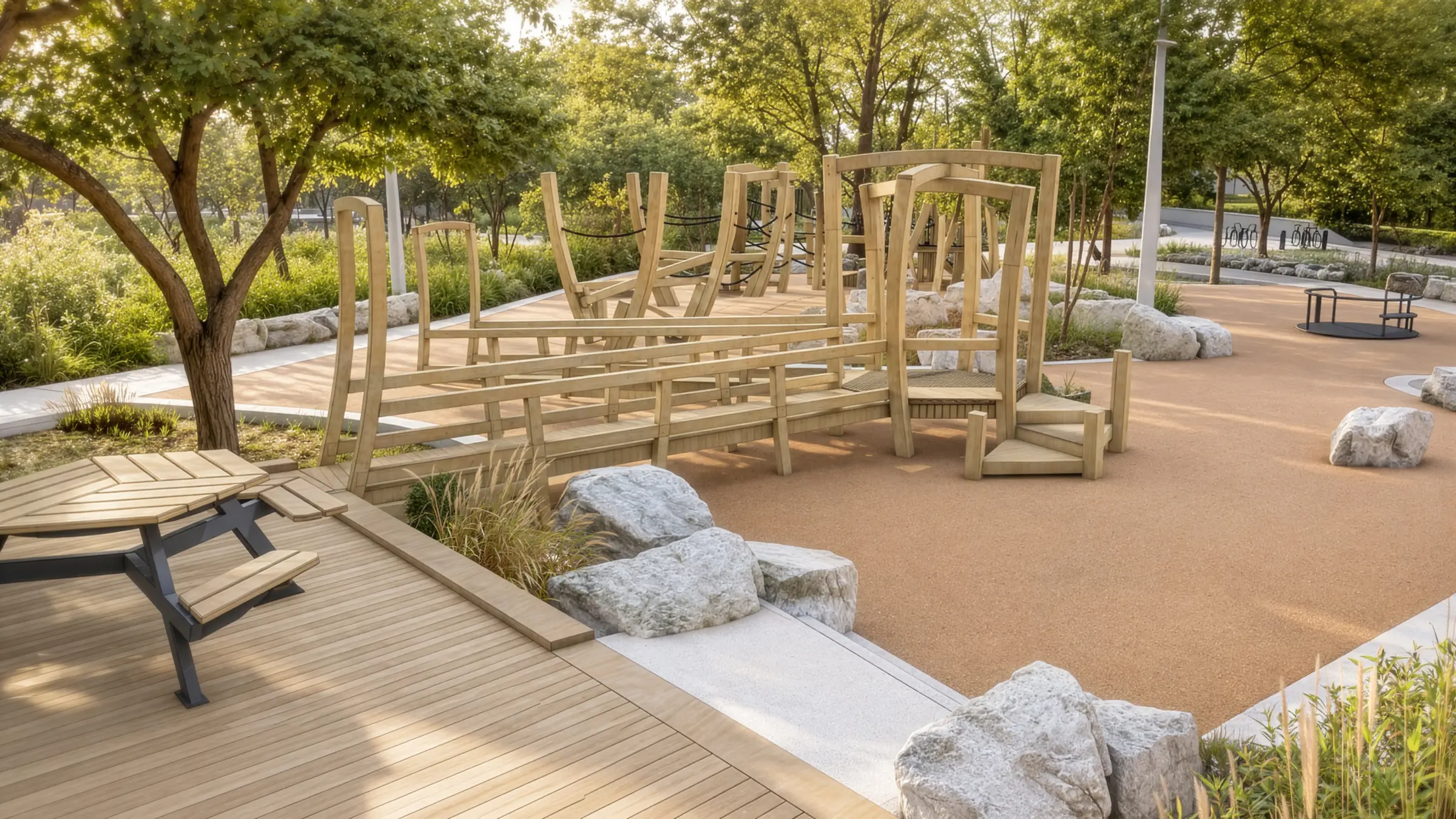
Parc Couvrette
Landscape as a gathering space
As heat waves intensify and expectations for public spaces continue to evolve, many municipalities are now seeking to imagine the pools of tomorrow.
This transformation, however, requires rethinking certain approaches to the design, management and operation of public aquatic infrastructure. Parking, maintenance, safety, circulation, climate comfort and diversity of uses must now be considered in an integrated way. Interdisciplinary collaboration has therefore become essential.
Landscape architects, architects, engineers, municipal professionals and technical specialists are all called upon to work closely together to create spaces better suited to contemporary realities.
For Projet Paysage, the challenge goes beyond construction. The goal is to design true living environments: inhabited landscapes where water, vegetation, well-being and social dynamics shape new ways of experiencing summer in the city.
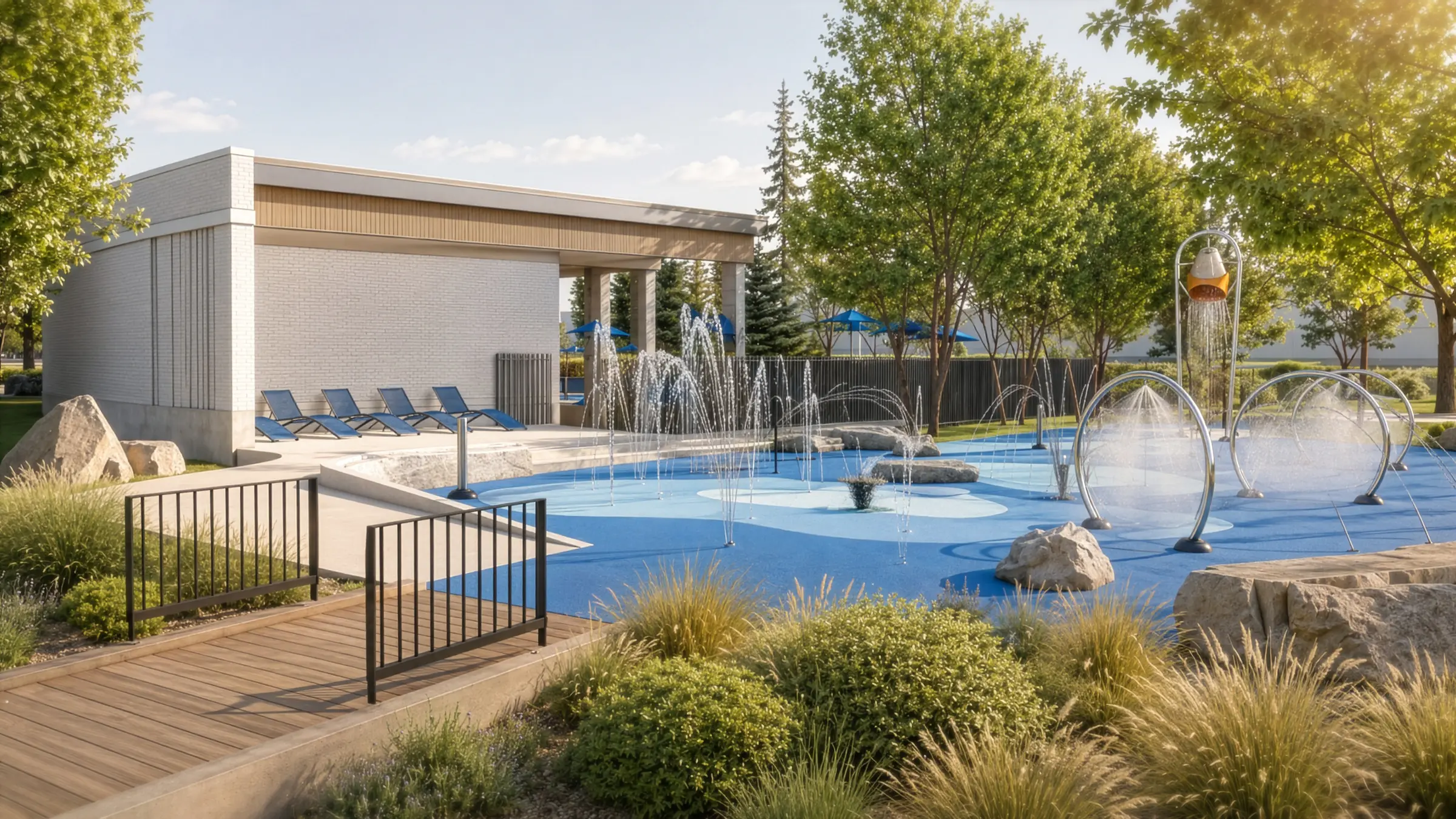
Parc Couvrette